
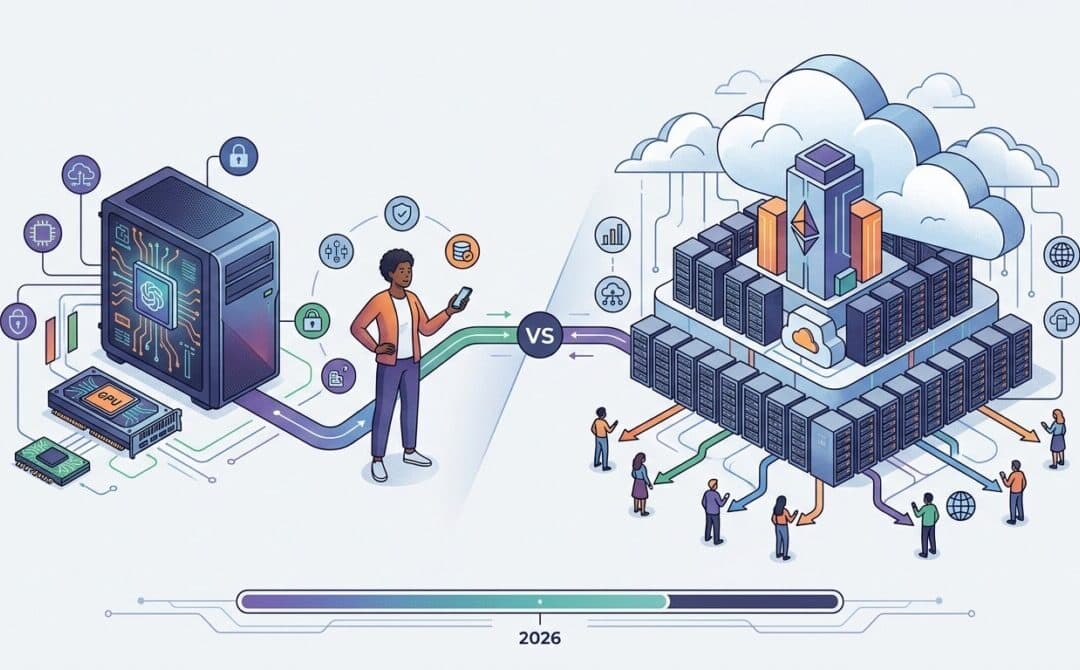
Local AI models are gaining traction as an alternative to commercial cloud-based solutions, but how do they truly compare in terms of performance and practicality? In a recent video by c’t 3003, the creator shared insights from weeks of hands-on experimentation with local large language models (LLMs). Here’s a breakdown of the key takeaways.
How Do Local AI Models Compare to Cloud-Based Models?
Local AI models, such as Qwen 3.8-27B, have made significant strides in performance. While they still lag behind commercial cloud models like Claude Opus 5 or Google Gemini in some areas, they are surprisingly capable for many tasks. For example, Qwen 3.8-27B can run on consumer-grade hardware like a 24 GB GPU, making advanced AI accessible to more users.
However, local models often struggle with general knowledge tasks. For instance, when asked factual questions, Qwen 3.8-27B produced several errors. This discrepancy arises because many AI benchmarks prioritize coding ability, tool usage, and memory over raw knowledge. As a result, local models excel in practical applications but may falter in trivia or encyclopedic tasks.
What Hardware Do You Need for Local AI Models?
The hardware requirements for running local AI models vary depending on the model’s size and complexity. For instance:
- Qwen 3.8-27B: Requires at least 24 GB of GPU memory or a system with fast unified memory, such as Apple M-series processors or AMD Strix Halo machines.
- Kimi k3: A high-end model needing over 1.5 TB of memory, which is impractical for most consumer setups.
- Quantized Models: Techniques like quantization reduce memory requirements by lowering data precision. For example, Qwen 3.6-27B can run on GPUs with as little as 16 GB using Mixture-of-Experts (MoE) techniques.
For budget-conscious users, older GPUs like the Nvidia RTX 3090 (24 GB) offer a cost-effective way to run advanced models like Qwen 3.8-27B.
The Role of Software in Local AI Performance
Software plays a crucial role in unlocking the potential of local AI models. Harnesses like OpenClaw and Opencode enable models to use tools, perform web searches, and execute code. These capabilities significantly enhance the practicality of local models, allowing them to perform complex tasks beyond simple text generation.
For example, Opencode can automate tasks like organizing files or troubleshooting software issues. Meanwhile, runtime environments like LM Studio and Ollama determine how efficiently models run, with some offering up to four times the speed of others.
Challenges and Opportunities
Despite their potential, local AI models face challenges such as censorship in certain models (e.g., Qwen’s inability to discuss sensitive topics) and the need for advanced hardware for top-tier performance. However, the creator notes a paradigm shift: smaller models optimized for external information retrieval may reduce the need for massive, knowledge-heavy models.
As local AI continues to evolve, its ability to integrate with tools and perform specialized tasks could make it a viable alternative to cloud-based solutions, especially for users concerned about data privacy and reliance on U.S.-based companies.
Conclusion
Local AI models like Qwen 3.8-27B demonstrate that advanced AI capabilities are no longer exclusive to large tech companies. With the right hardware and software, users can achieve impressive results, paving the way for a more decentralized and accessible AI landscape. As the creator emphasizes, the true potential of local AI lies in its ability to integrate with tools and adapt to specific needs, signaling a shift in how we approach AI technology.