Game development has long been considered a complex and resource-intensive process, often requiring large teams and significant time investments. However, recent advancements in AI tools are beginning to challenge this notion. In a recent video, creator Matt Wolfe shared his journey of developing a video game, The Librarian 2, using cutting-edge AI coding models. This blog post summarizes the key takeaways from his experience and explores how AI is reshaping the game development landscape.
Building The Librarian 2 with AI
Matt Wolfe set out to create a sequel to his earlier game, The Librarian, which he had developed nearly a year ago. The original game was a 2D experience where players managed a library, picking up books and returning them to shelves while managing chaos caused by unruly students. The sequel, The Librarian 2, aimed to uplevel the original concept with enhanced graphics, new features, and a 3D environment.
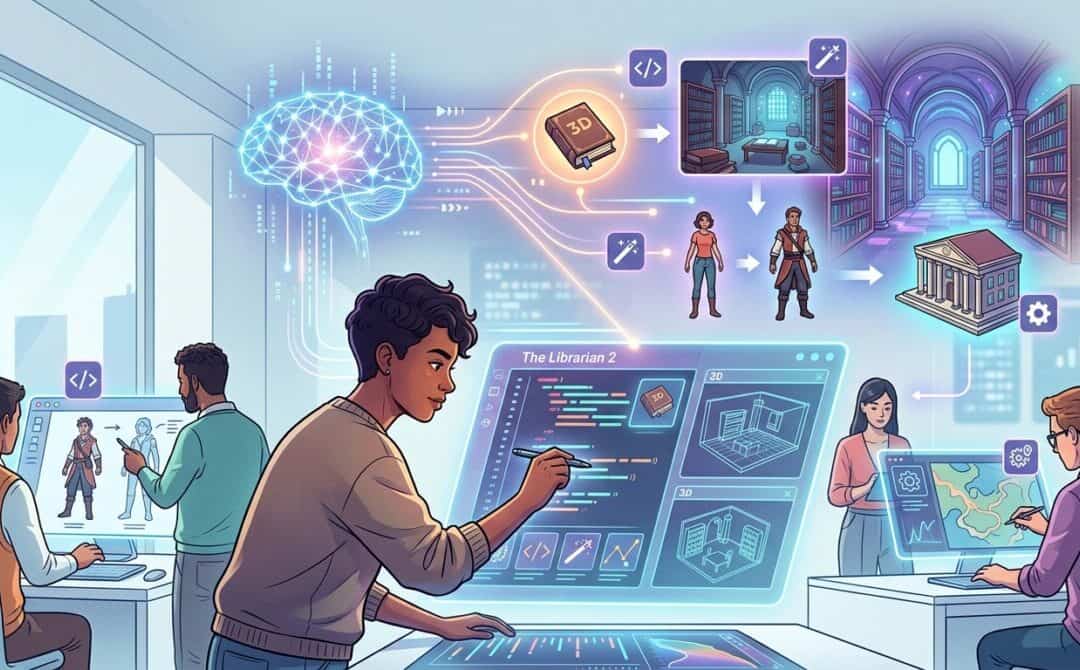
To achieve this, Wolfe utilized two advanced AI coding models: Claude Code and OpenAI’s GPT 5.6. He began the project by outlining his ideas and feeding them into Claude Code, which generated the initial game code and assets. This included 10,400 lines of code across 33 modules, with every texture, material, character, and sound effect generated in code. Once the initial version was complete, Wolfe transitioned to GPT 5.6 for fine-tuning and balancing the game’s features.
Key Features of The Librarian 2
The sequel introduced several new features and improvements, including:
- 3D Graphics: A significant upgrade from the 2D visuals of the original game.
- Procedurally Generated Levels: Each playthrough offers a unique library layout.
- Meta Upgrades: Players can unlock permanent upgrades, making subsequent runs easier.
- New Challenges: The game includes boss systems, natural disasters like earthquakes and tornadoes, and disruptive elements such as a mischievous bully and a complaining “Karen.”
- Power-Ups: Players can collect items like mushrooms that temporarily enhance abilities, adding a layer of strategy.
The Role of AI in Game Development
Wolfe’s experiment highlights the potential of AI to streamline certain aspects of game development. For instance, the AI tools were able to:
- Generate initial game code and assets quickly.
- Test the game for bugs and automatically make adjustments to improve functionality and balance.
- Provide detailed design documentation to facilitate further development.
Despite these advancements, Wolfe emphasized that AI is far from replacing human game developers. While AI can handle coding and asset generation efficiently, it struggles with the nuanced decision-making required to create a truly engaging and balanced game. Elements like storytelling, gameplay mechanics, and artistic direction still require human creativity and expertise.
Challenges and Limitations
Throughout the development of The Librarian 2, Wolfe encountered several challenges that underscored the limitations of AI in game development:
- Balancing Difficulty: Adjusting the game’s difficulty curve required multiple iterations and human input.
- Visual Consistency: The AI struggled to create a character design that matched the original concept art.
- Level Design: While the levels were procedurally generated, they lacked distinct visual identities, making them feel repetitive.
These challenges highlight the importance of human oversight in refining and polishing a game to ensure it meets players’ expectations.
Final Thoughts: Are Game Developers “Cooked”?
Wolfe concluded that while AI tools can accelerate certain aspects of game development, they are not a replacement for human creativity and decision-making. The real challenge in creating a successful game lies in the countless small decisions that shape its gameplay, balance, and overall experience. These are areas where human expertise remains indispensable.
Moreover, Wolfe dismissed the notion that gamers will abandon professionally developed games in favor of creating their own. While AI makes it easier for individuals to experiment with game development, most players prefer to enjoy polished, professionally crafted games rather than investing time and effort into creating their own.
Ultimately, AI is a powerful tool that can complement human developers, making the process more efficient and accessible. However, the core elements that make a game truly great—creativity, storytelling, and design—still require a human touch.
Conclusion
Wolfe’s experiment with The Librarian 2 offers a fascinating glimpse into the future of game development. While AI tools have come a long way in simplifying the technical aspects of creating games, they are not yet capable of replacing the artistry and expertise of human developers. For now, AI serves as a valuable assistant, helping to speed up workflows and lower barriers to entry for aspiring game creators. However, the heart and soul of game development remain firmly in human hands.