
English spelling is notoriously tricky, and for good reason. In a recent video by Answer in Progress, the creator dives into the complexities of English spelling, sharing their personal journey to improve their skills and uncovering the fascinating history behind the language’s quirks. Here’s a summary of the key takeaways from their exploration.
Why Is English Spelling So Difficult?
The creator begins by sharing their struggles with spelling, recounting a childhood memory of cheating on a spelling test out of frustration. Despite modern tools like spell check, the challenge of spelling remains a source of annoyance for them, especially when trying to express thoughts in writing. This frustration led them to embark on a journey to improve their spelling skills by training like a spelling bee champion.
One of the key insights from the video is that English spelling is inherently challenging due to its inconsistency. Unlike languages such as Italian, where words are typically spelled the way they sound, English often defies phonetic logic. A single sound can have multiple spellings, and a single spelling can represent multiple sounds. This complexity is part of what makes English spelling so difficult to master.
The Role of Spelling Bees
To tackle their spelling woes, the creator decided to train for a spelling bee. They explored the structure of spelling bees, which typically involve a pronouncer, a speller, and a judge. However, they quickly discovered that adult spelling bees are rare, with only a few annual events available, such as one in Long Beach, California. Unable to participate in an official competition, the creator decided to create their own spelling bee-inspired website to practice.
Building a Spelling Bee Website
Using tools like Hostinger’s website builder and the Merriam-Webster dictionary API, the creator developed a custom spelling bee website. The site included features like daily word challenges, definitions, and an on-screen keyboard to simulate the spelling bee experience. However, the creator realized that their initial design focused too much on penalizing mistakes, which led them to rethink their approach.
The History Behind English Spelling
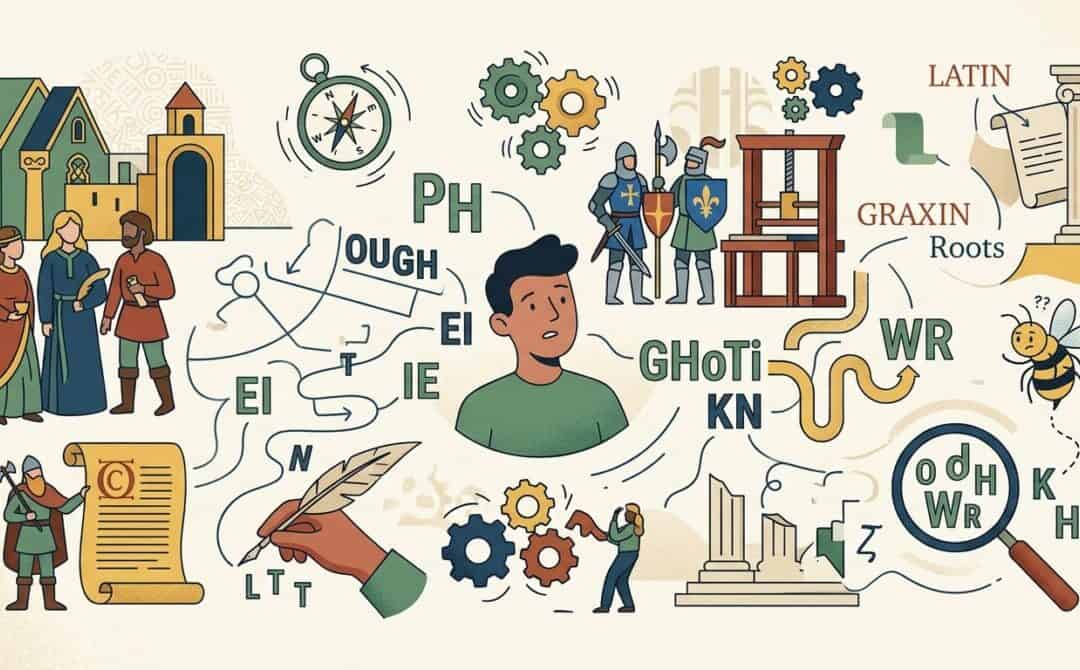
As part of their journey, the creator delved into the history of the English language to understand why its spelling is so inconsistent. They discovered that English is a blend of influences from Germanic tribes, Latin, French, and other languages. Key historical events, such as the Norman Conquest and the Great Vowel Shift, contributed to the language’s evolution and its often perplexing spelling rules.
For example, the adoption of the Latin alphabet to represent Germanic sounds created initial inconsistencies. Later, French scribes introduced their own spelling conventions during the Norman rule of England. The invention of the printing press in the 1400s further standardized spellings, but pronunciation continued to evolve, leading to the disconnect between how words are spelled and how they sound today.
Learning from Spelling Bee Champions
To improve their skills, the creator sought advice from spelling bee champions and coaches. They learned that memorizing all 470,000 words in the Merriam-Webster Unabridged Dictionary is impossible. Instead, champions focus on understanding the etymology and linguistic patterns behind words. By studying the origins and histories of words, they can make educated guesses about their spellings.
Redesigning the Spelling Bee Website
Inspired by this new perspective, the creator revamped their spelling bee website to emphasize learning and exploration rather than punishment. They added etymologies for each word, providing historical context to help users understand why words are spelled the way they are. The updated website allows users to practice spelling without the pressure of being eliminated for mistakes, fostering a more educational and enjoyable experience.
Conclusion
By the end of their journey, the creator realized that English spelling, while frustrating, is also a fascinating reflection of the language’s rich history and cultural influences. Instead of viewing spelling mistakes as failures, they began to see them as opportunities to learn and appreciate the quirks of the English language. This shift in perspective transformed their relationship with spelling, turning it from a source of embarrassment into a source of curiosity and wonder.